
The rise of artificial intelligence in content creation has revolutionized how businesses approach their digital marketing strategies. AI tools can generate vast amounts of content at unprecedented speeds, offering efficiency and scalability that human writers alone cannot match. However, amidst this technological advancement, a critical question emerges: Does AI diminish the need for human SEO expertise? The unequivocal answer is no. In fact, human SEO professionals are more vital than ever, especially when considering the nuances of Google’s E-E-A-T guidelines (Experience, Expertise, Authoritativeness, and Trustworthiness).
This article will delve into why human SEO expertise remains indispensable for a robust AI content strategy, focusing on its role in achieving high-quality, impactful content that resonates with both users and search engines.
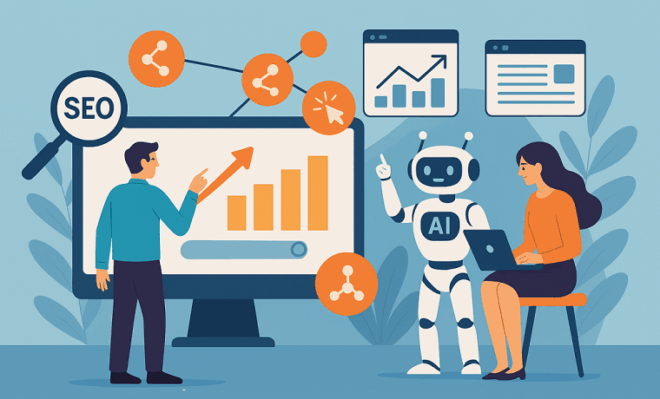
Understanding E-E-A-T in an AI-Driven Landscape
Google’s E-E-A-T guidelines are a cornerstone of its algorithm, designed to assess the quality and reliability of content. In a world increasingly populated by AI-generated text, the ability to demonstrate genuine Experience, Expertise, Authoritativeness, and Trustworthiness becomes even more challenging and, consequently, more crucial. While AI can synthesize information, it lacks lived experience, nuanced understanding, and the capacity for original thought – all elements that contribute significantly to E-E-A-T.
Human SEO experts are adept at identifying knowledge gaps, verifying facts, and ensuring that content reflects a deep understanding of the subject matter, going beyond mere information compilation. They can guide AI to focus on specific, authoritative sources and craft prompts that encourage the generation of content imbued with a human touch and genuine insight, which is paramount for E–E-A-T.
Strategic Content Planning and Keyword Research Beyond AI’s Scope
AI content generators excel at producing content based on given prompts and keywords. However, the strategic thinking required for effective content planning and in-depth keyword research extends far beyond AI’s current capabilities. Human SEO professionals possess the foresight to analyze market trends, understand user intent, identify emerging topics, and uncover long-tail keywords that might be overlooked by AI. They can develop comprehensive content calendars, map content to different stages of the customer journey, and strategize for pillar pages and topic clusters – all intricate processes that demand human intuition and analytical prowess. This strategic foundation ensures that AI-generated content is not just voluminous but also purposeful, targeting the right audience with the right message at the right time.
Injecting Human Nuance, Empathy, and Brand Voice
One of the most significant limitations of AI content is its struggle to consistently capture human nuance, empathy, and a distinct brand voice. While AI can mimic writing styles, it often falls short in conveying genuine emotion, understanding cultural subtleties, or injecting the unique personality that defines a brand.
Human SEO experts work alongside content strategists and brand managers to refine AI outputs, ensuring that the tone, style, and messaging align perfectly with the brand’s identity. They can add anecdotes, personal experiences, and rhetorical flourishes that make content more engaging, relatable, and trustworthy to a human audience. This human touch is crucial for building connections, fostering brand loyalty, and differentiating content in a crowded digital space.
Quality Control, Fact-Checking, and Ethical Considerations
The efficiency of AI content generation comes with a caveat: the potential for inaccuracies, biases, or even unintended misinformation. While AI models are constantly improving, they can still “hallucinate” facts or perpetuate biases present in their training data. This makes human oversight and rigorous quality control indispensable. Human SEO experts are vital for fact-checking AI-generated content, ensuring its accuracy, and correcting any misleading information.
Furthermore, they play a critical role in navigating the ethical landscape of AI content, addressing concerns around plagiarism, copyright, and responsible content creation. Their judgment is essential in maintaining content integrity and upholding ethical standards, which directly impacts a brand’s trustworthiness and, by extension, its E- E-A-T.
Adapting to Algorithm Updates and Continuous Optimization
Search engine algorithms are dynamic, constantly evolving to provide users with the most relevant and high-quality results. While AI can analyze data, interpreting the implications of algorithm updates and strategizing for continuous optimization requires human ingenuity.
Human SEO professionals stay abreast of the latest algorithm changes, understand their impact on ranking factors, and adapt content strategies accordingly. They analyze performance data, identify areas for improvement, and implement iterative changes to content and technical SEO elements. This ongoing optimization, driven by human expertise, ensures that AI-generated content remains competitive and continues to perform well in search results, maximizing its visibility and impact.
Conclusion
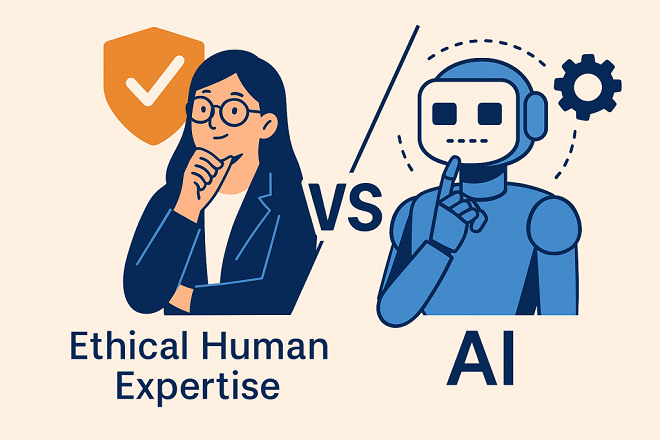
The integration of AI into content creation is undoubtedly transforming the digital landscape. However, it is not a replacement for human SEO expertise but rather a powerful tool that augments it. Human SEO professionals bring strategic thinking, an understanding of E-E-A-T, the ability to inject nuance and brand voice, crucial quality control, and the agility to adapt to ever-changing algorithms. By leveraging AI for efficiency and scale while anchoring the strategy with human insight and oversight, businesses can create compelling, authoritative, and trustworthy content that truly stands out in the digital realm.
The future of content is a synergistic partnership between human intelligence and artificial intelligence, with human SEO expertise serving as the indispensable guide.
About Author

Eyden Haze
Eyden Haze is a digital marketer, a web designer and technology fanatic from Sydney, Australia. With over 7 years of experience in web industry, he has helped his clients to launch their marketing campaigns successfully. He also likes to explore various online tools and share that knowledge by writing useful blog posts.