
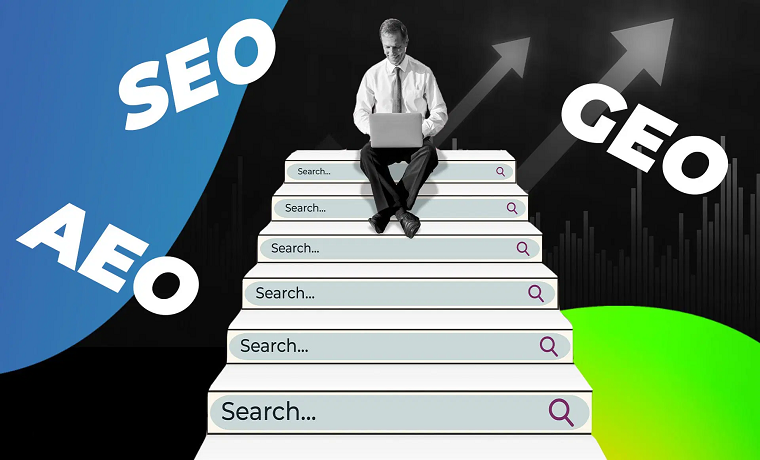
In 2026, the digital marketing world has officially moved past the era of the “ten blue links”. We are living in an answer-driven economy where users no longer just search for information – they expect it to be delivered, synthesized, and verified instantly. To stay ahead of the competition, businesses must embrace a hybrid model that merges Search Engine Optimization (SEO) with Generative Engine Optimization (GEO).
While SEO focuses on driving traffic to your domain, GEO ensures your brand is the primary source cited by AI models like Gemini, ChatGPT, and Perplexity. Here is how to master this synergy to outperform your competitors this year.
1. The Power of “Entity-Based” Architecture
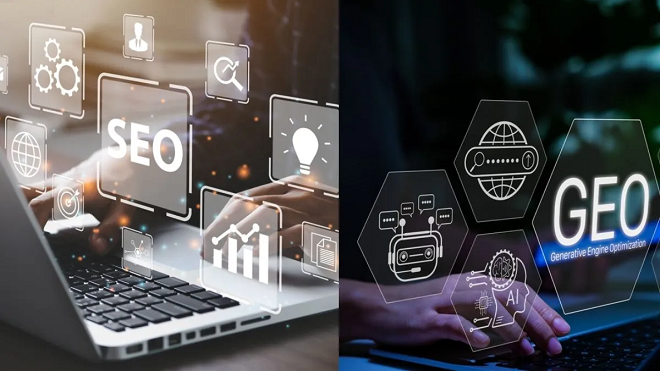
Traditional SEO was built on keywords; modern GEO is built on Entities. AI engines in 2026 don’t just read words; they map relationships between people, places, and concepts.
To outperform competitors, you must move beyond keyword density and focus on Entity Mapping. This involves using highly specific Schema Markup (JSON-LD) to define your brand’s relationship to industry concepts. By clearly labeling your authors as experts, your products as solutions, and your data as verified facts, you provide a “map” that AI engines use to build their knowledge graphs. If the AI understands your brand as a “Primary Entity,” it is significantly more likely to cite you in a summarized response.
Navigating this shift from keywords to entities requires a precise technical approach to ensure your brand is correctly categorized within the global knowledge graph. By utilizing professional GEO services, companies can audit their existing site architecture to identify and bridge gaps in machine-readable data. These strategic optimizations allow your content to be parsed more effectively by AI agents, increasing the likelihood of your brand being featured as a primary citation. Mastering this technical layer is essential for any business aiming to maintain a competitive semantic footprint in 2026.
2. Transitioning to “Answer-First” Content Design
One of the most significant shifts in 2026 is the preference for Modular Content. Competitors who still write 3,000-word “walls of text” are losing visibility because AI models find them difficult to parse.
To win, implement the “Snippet-First” rule:
- The TLDR Lead: Every page should begin with a concise 60-80 word summary that directly answers the primary query.
- Fact-Dense Paragraphs: Structure your subheadings (H2s and H3s) as questions and follow them immediately with data-rich, quotable statements.
- The GEO Formatting Trifecta: Use tables for comparisons, bulleted lists for processes, and numbered lists for rankings. AI engines “harvest” these structured blocks because they are easy to reformat into chat responses.
3. Closing the “Citation Gap” via Digital PR
In 2026, your off-page strategy is no longer just about getting backlinks for “link juice”; it is about building a Semantic Footprint. GEO relies heavily on what the web says about you in trusted, non-owned spaces.
Analyze where AI models are pulling information for your target keywords. If a competitor is being cited but you aren’t, you have a Citation Gap. You can close this by:
- Community Authority: Actively contributing to Reddit, Quora, and niche industry forums. AI models frequently use these platforms to gauge “real-world” sentiment and user consensus.
- Multimodal Presence: Optimizing your YouTube transcripts. In 2026, multimodal AI models (like Gemini) process video audio as primary data. A brand that exists in text, video, and audio has a 3x higher probability of becoming the “consensus source”.
4. Prioritizing “Information Gain” Over AI Noise
The 2026 algorithm update has made it clear: if your content just rehashes what is already on the web, it will be ignored by both Google and LLMs. Competitors who use AI to generate generic blog posts are seeing their rankings plummet.
To outperform them, focus on Information Gain. This means publishing original research, proprietary data, first-hand case studies, or unique expert opinions. When you provide a “new fact” to the internet, you become the definitive source for that fact. AI engines are programmed to seek out the most original and authoritative data points to improve the quality of their own answers.
5. Technical Readiness for “Agentic” Crawling
Traditional SEO focuses on Core Web Vitals (speed and UX). While these remain important for humans, GEO requires Technical AI-Readiness.
- HTML Clarity: Ensure your most valuable answers are in the initial HTML response rather than hidden behind complex JavaScript.
- API for Content: Modern agencies are now using “Content APIs” to allow AI agents to fetch real-time data from their sites. If your competitor’s site is a “black box” and yours is an “open library” for AI crawlers, you win the citation game every time.
The 2026 Competitive Advantage
The secret to outperforming your competitors this year is understanding that SEO and GEO are not competing tactics they are a feedback loop. High traditional rankings (SEO) give you the authority needed to be trusted by AI engines. Being cited by AI (GEO) increases your brand’s search volume, which in turn boosts your traditional SEO rankings.
By structuring your content for machine extraction while maintaining the human-centric quality of E-E-A-T (Experience, Expertise, Authoritativeness, and Trustworthiness), you create a digital presence that is unshakeable in any search environment.
About Author

Founder
David Watson is the founder of DesignDrizzle and is a professional website designer for over 10 years. He has competence in creating visually appealing and user-friendly websites for all the clients. He likes to explore new and creative ideas for designing, photography effects and other inspirational subjects