

The financial reality for Utah businesses has shifted dramatically. Across the Silicon Slopes, from the tech density of Lehi to the commercial centers of Salt Lake City, traditional regional customer acquisition is hitting a wall of diminishing returns. Relying on decade-old digital playbooks is no longer just inefficient; it is actively draining capital. For business owners focused on scaling operations, the mandate is clear: pivot from renting temporary visibility through ad networks to owning permanent digital authority.
The Broken Economics of Local PPC
For years, local pay-per-click (PPC) campaigns and standard search engine optimization were the standard methods for dominating a regional market. But the math has broken down. Paid ad networks are choked with record competition, causing the cost of localized commercial keywords to skyrocket. For Utah contractors, medical groups, and B2B service firms, this hyper-inflation has caused Customer Acquisition Cost (CAC) to surge to unsustainable levels.
Paid traffic operates on a strict pay-to-play model. The moment you stop pumping cash into the ad account, your lead flow drops to zero. As local ad bidding increases year over year, your profit margins compress. This creates an unstable business model. Local brands need a self-sustaining marketing infrastructure – one that generates a steady stream of high-intent leads without forcing the company to pay a rising transaction fee to ad platforms for every single customer click.
Local Market Insight: Paid search channels are shifting from an growth engine into an expensive liability. Relying entirely on bidding wars creates a direct threat to your bottom line, making non-extractive acquisition channels a structural necessity.
The Pivot to GEO: Securing AI Citations
The shift in customer behavior is structural, driven by the mainstream adoption of Generative Engine Optimization (GEO). Consumers are abandoning the tedious process of digging through pages of search engine links and blog posts. Instead, they are using conversational AI systems—like ChatGPT, Gemini, and Perplexity – to make fast, definitive purchasing decisions. When someone asks an AI engine for a hyper-local recommendation, the model evaluates the market, selects the top options, and presents them with explicit citations linking back to its sources.
GEO is the strategic process of optimization that ensures AI engines consistently choose and cite your brand. Winning a citation within an AI response gives you a massive competitive advantage. It injects your business directly into the answer at the exact moment a buyer is showing high intent. Unlike a temporary paid banner or a sponsored link, an AI citation secured through deep data authority acts like a permanent digital asset, consistently capturing market share over the long term.
Re-Engineering Web Design for Machine Consumption
To win these highly profitable AI recommendations, you have to fundamentally change how your website is built. AI models do not care about trendy animations or subjective visual aesthetics; they scan your digital channels using strict data parsing and mathematical tokenization. To maximize your long-term marketing ROI, your website must be built from the ground up as a high-density data source.
This structural overhaul requires a specific technical blueprint focused on transparency and discoverability:
- Deep Relational Schema Nests: Basic contact information markup is no longer enough. Your site needs advanced schema deployments that explicitly link your services, exact geographic service boundaries, executive credentials, and verified customer reviews into a single, unmistakable data package.
- High-Density Data Summaries: AI scrapers value direct clarity. Placing objective, factual summaries at the top of your core service landing pages gives AI crawlers structured data blocks that are incredibly easy to parse, extract, and cite as reference material.
- Server-Side Rendered Architecture: Complex JavaScript frameworks routinely break or block autonomous web crawlers. Shifting to clean, server-side rendered structures ensures that AI bots can index every layer of your regional service offerings instantly and without errors.
Technical Reality: If an AI engine cannot easily parse your website’s core data within milliseconds, your business does not exist to that engine. Clean, data-forward web design is the new baseline for local market visibility.
The Math Behind Sustainable Scaling
The financial power of GEO shows up clearly when you look at your core business metrics. Look at the standard calculation for Customer Acquisition Cost:
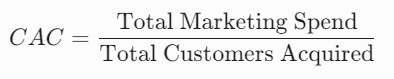
In a traditional PPC model, your total marketing spend (the numerator) must constantly scale upward to match ad inflation, keeping your CAC high and trapping your business in an expensive cycle.
Investing in a GEO-optimized digital foundation flips this dynamic. It represents a fixed capital investment that builds value over time. As your structured data and verified local reviews earn citations across major AI models, your volume of organic, high-intent leads grows without a corresponding increase in ad spend. Over a multi-quarter timeline, your cost per acquisition drops significantly, unlocking a far higher Long-term Marketing ROI than traditional ad-dependent strategies can ever deliver.
Securing Your Local Market Share
For Utah brands looking to scale, the window of opportunity is wide open right now, but it is closing fast. The companies that invest early in clean, data-heavy web design and deliberate generative engine optimization will establish themselves as the default recommendations in the AI ecosystem. By moving away from volatile paid traffic and building deep algorithmic authority, your business can insulate itself from rising ad costs, systematically lower its CAC, and dominate the local market for years to come.
About Author

Founder
David Watson is the founder of DesignDrizzle and is a professional website designer for over 10 years. He has competence in creating visually appealing and user-friendly websites for all the clients. He likes to explore new and creative ideas for designing, photography effects and other inspirational subjects